Day 121, October 26, 2009 from Oscar (my translation)

The headlines today show us the lifeless bodies of two assassinated men, one in the north and another in Tegucigalpa. Enzo Micheletti (24), nephew of the dictator, executed in a thicket in the city of Choloma, and Colonel Concepción Jimenez (46), manager of a military industry business and ex-head of G2, the army intelligence agency, assassinated by three individuals on leaving his house in Tegucigalpa.

It is still officially unknown if the deaths are related to each other. The police has limited itself to noting that it will evaluate all existing hypotheses. What is certain is that, given the high levels of violence that we live with every day, the penetration of drug cartels into every possible political and economic space, the proliferation of the mercenary "industry" which turns death into a universal consumer product, executions like that of the young Micheletti and the official happen daily and it's likely that they are not related.

But recognizing the moment of intense political crisis in which we are living, in which many points on the agenda are being discussed under the table, especially between the coup cartel that seeks to bend the will of the hardliners of the regime, it would not be naive to see these deaths as a warning to the two most obdurate sectors of the resistance: Micheletti and the Armed Forces themselves.

After the Guaymuras dialogue was declared dead last weekend, as the uncertainty grew among us on seeing the options available to us given the regime's intransigence, we heard the voice--which at that moment sounded like a storm--of John Biehl, Chilean representative from the OAS to the dialogue in the Hotel Clarión: "In the end common sense will prevail, there will be a return to institutionality, if not complete, at least partial," the official concluded before departing for Washington with the object of presenting a report about the Tegucigalpa talks.

Today it was confirmed that the spokesperson of the U.S. Department of State will arrive in the country next Wednesday to "finish" the process of reinstating Zelaya. This week Mel will we back in the presidency," Andrés Pavón told Radio Globo, and his words echoed those of the president himself the previous Saturday when he spoke by telephone from the Brazilian embassy and said optimistically to the liberal assembly: "the reinstatement of the president elected by the Honduran people is a few days away, our victory for Honduras and for the return of peace and democracy is a few days away."

All these coinciding statements, added to the emergency call made by the Resistance to discuss the resumption of talks makes it appear that a reinstatement is indeed likely. "We hope that this dialogue will be fruitful because a dialogue without results is a dialogue of the deaf," said resistance leader Juan Barahona [to Efe] in reference to the resumption of talk that should be called the Phoenix Talks for their ability to rise from the dead.

In a recent interview Micheletti said he was permanently disposed to dialogue and reiterated that he would abandon his post "if Zelaya also gives up trying to return to the presidency," his oft-repeated statement that does little to resolve the crisis. "I am here to negotiate, to come to an arrangement about what is best for Honduras, not what is best for me," he noted, "and we simply believe that the coming November 29th elections are necessary for democracy."

And although the government threatens to apply maximum force against the resistance if it dares to boycott the elections, it is clear that the regime is seriously debilitated. The international community has made clear that it will not recognize the results of the elections nor will it recognize the government that arises from them if Zelaya is not returned to power. The OAS, the EU, and the Carter Center (which Micheletti requested to serve as a legitimating presence) have expressed their concern about the climate in which the elections would be realized.

The army is prepared (with police assistance) to militarize the schools in the whole country in preparation for the elections. In conservative numbers we can speak of 22,000 soldiers that would have to be distributed among 5,300 schools. Four soldiers or police watching each school in the country to protect democracy, leaving the streets completely alone. Since the regime has remained in power through the absolute use of force, they know that if they abandon the streets, they will be immediately taken over by a Resistance looking for weak targets of the dictatorship to attack them. The regime cannot, in this sense, make it to November without a truce with Zelaya and that truce is necessarily contingent upon his reinstatement.

And the resistance continues its silent growth. On the weekend there was a meeting of elderly Garifunas in the community of Triunfo de la Cruz. Among the topics of discussion were the cultural problems that the Garifuna community was suffering, the need to push for a bicultural education, the problems with land possession in different communities but especially in those affected by the Tela Bay project, owned primarily by oligarchic interests. Six months ago a meeting would have arrived at that conclusion that community work was the proper way to respond to the different challenges. In this occasion, this was part of the conclusion; the other part was that a popular and democratic constituent assembly was needed to be able to incorporate these demands from the magna carta. The dictatorship tried to stop the process of social and political demand for a new constituent assembly. Instead, the conviction that the country's development can only be possible through the democratization of our political system has spread throughout the country.

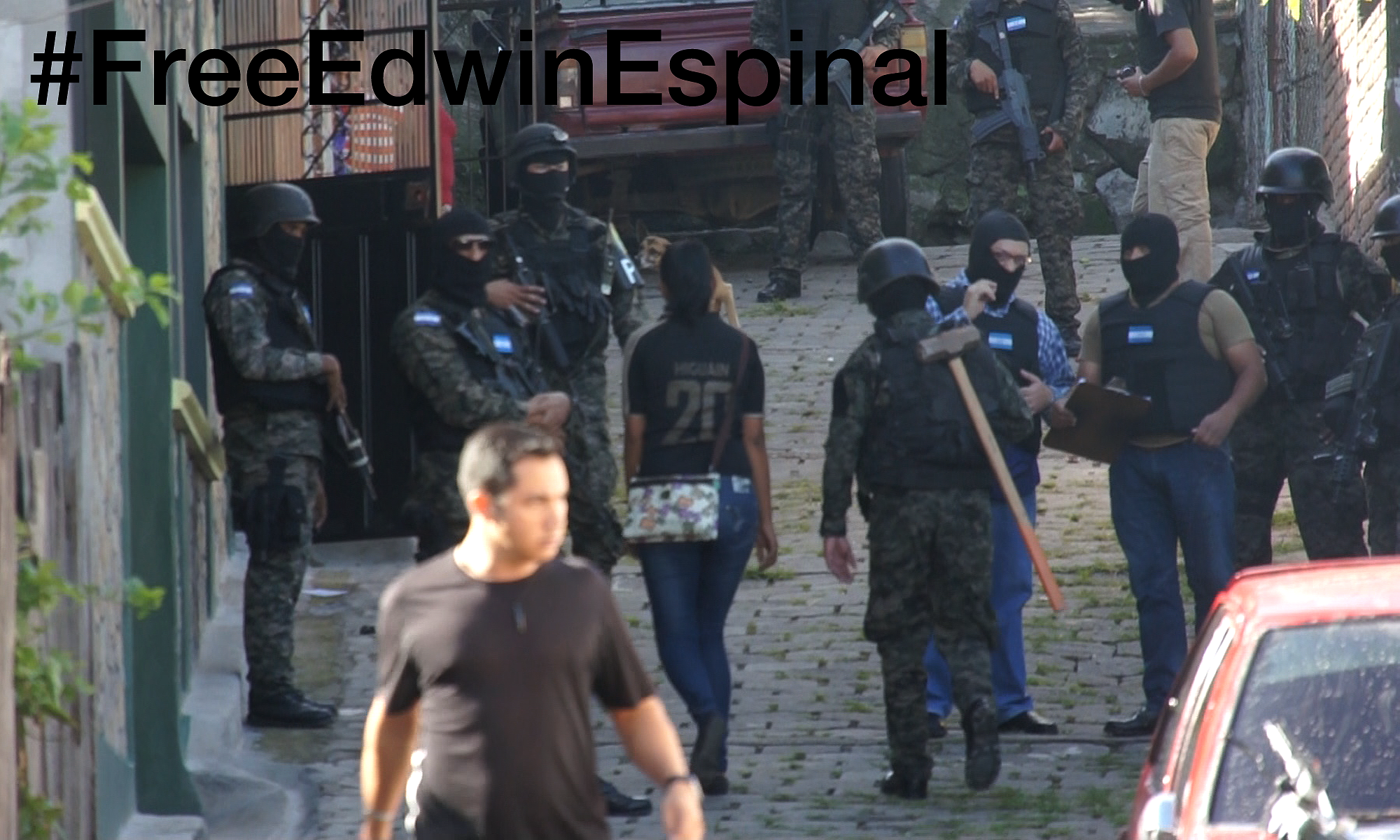
Entering Tegucigalpa the police checkpoints randomly stop cars. They force their occupants to get out and search the car's interior. They seek arms, the arms that only they possess and that they fear will fall into our hands.

¡NO PASARÁN!

Original:

Día ciento vente y uno, 26 de octubre de 2009

Los encabezados de los noticieros de hoy muestran los cuerpos sin vida de dos hombres asesinados, uno en el norte y el otro en Tegucigalpa. Enzo Micheletti (24), sobrino del dictador, ejecutado en un matorral de la ciudad de Choloma, y el coronel Concepción Jimenez (46), gerente del la empresa de la Industria Militar y ex jefe del G2, inteligencia del ejercito, asesinado por tres individuos a la salida de su casa en Tegucigalpa.

Aun no se conoce de forma oficial si ambas muertes están relacionadas entre sí, la policía se ha limitado a indicar que evaluará todas las hipótesis existentes. Lo cierto es que, dados los altos índices de violencia con que vivimos diariamente, la penetración de los carteles de la droga en cada espacio político y económico, la proliferación de la “industria” del sicariato que hace de la muerte un producto de consumo universal, ejecuciones como las del joven Micheletti y del oficial, se dan cada día por decenas y es probable que no estén relacionadas.

Pero reconociendo el momento de intensa crisis política en que vivimos, en la cual hay muchos puntos de agenda que se discuten bajo la mesa, especialmente entre el cartel golpista que busca doblegar la voluntad de la facción dura del régimen, no resulta ingenuo ver estas muertes como un llamado de atención a los dos sectores más duros de la dictaruda: Micheletti y las propias Fuerzas Armadas.

Luego de declarado muerto el diálogo Guaymuras el fin de semana pasado, cuando entre nosotros creció la incertidumbre de ver las opciones que abría la intransigencia del régimen, surgió la voz, que en aquel momento parecía a temporal, de John Biehl, canciller Chileno encargado, por parte de la OEA, de las mesas del diálogo en el Hotel Clarión: "Al final va a prevalecer el sentir de la gente, va a haber un retorno a la institucionalidad, si no es total, a lo menos parcial", concluyó el funcionario momento antes de salir rumbo a Washington con el objeto de presentar un informe de la mesa de Tegucigalpa.

El día de hoy se confirmó la visita del Vocero del Departamento de Estado norteamericano que llegará al país el próximo miércoles para “terminar” el proceso de la restitución de Zelaya. “Esta semana mel estará en la presidencial” dijo Andrés Pavón a radio Globo y sus palabras coinciden con las expresadas por el propio presidente el sábado anterior cuando habló por teléfono desde la embajada de Brasil y dijo optimista para la asamblea liberal: "A pocos días está la restitución del presidente que eligió el pueblo hondureño, a pocos días está nuestro triunfo para Honduras y para que vuelva la paz y la tranquilidad".

Toda esta coincidencia de expresiones, sumada al llamado de emergencia hecho por la Resistencia para discutir la reanudación del diálogo hace creer que existen probabilidades que pueda haber una restitución. ¨Nosotros esperamos que este diálogo sea fructífero porque un diálogo donde no hay resultados es un diálogo de sordos", dijo a Efe el dirigente del Frente Juan Barahona en referencia a la reanudación del diálogo que debería llamarse Fénix, por su capacidad de resurgir de la muerte.

En una entrevista reciente Micheletti dijo estar permanentemente dispuesto al diálogo y reiteró que abandonará el cargo, ¨si Zelaya también desiste de volver a la Presidencia¨. Expresión ya conocida que poco ayuda para solucionar la crisis. "Estoy acá dispuesto a negociar, a transar, lo mejor para Honduras, no en lo particular", apuntó Micheletti, "simple y sencillamente creemos que la democracia se sostiene con las próximas elecciones del 29 de noviembre¨.

Y aunque el gobierno amenaza con aplicar el máximo de la fuerza a la resistencia si esta se atreve a boicotear las elecciones, lo cierto es que el régimen se encuentra seriamente debilitado. La comunidad internacional ha ratificado su voluntad de no reconocer los resultados de los comicios ni al Gobierno que surja de las mismas si no se restituye a Zelaya en el poder. La OEA, La UE, y el mismo centro Carter que llamara Micheletti como organismo legitimador han expresado su preocupación por el clima en donde se han de realizar las elecciones.

El Ejército se dispone, (con la asistencia de la policía), a militarizar las escuelas de todo el país en preparación para los comicios. En número conservadores podemos hablar de 22,000 elementos que tendría que distribuir entre 5,300 centros educativos. 4 soldados o policías cuidando cada escuela, cada colegio del país para proteger la democracia dejando las calles completamente solas. Cómo el régimen se ha mantenido en el poder bajo el uso absoluto de la fuerza, sabe que al dejar las calles, estas serán tomadas inmediatamente por una Resistencia que espera blancos débiles de la dictadura para atacarlos. No puede, en ese sentido, llegar a Noviembre sin una tregua con Zelaya y dicha tregua pasa, necesariamente por su restitución.

Y es que la resistencia continua su crecimiento silencioso. El fin de semana se realizó la asamblea de ancianos garífunas en la comunidad de Triunfo de la Cruz. Entre los puntos a tratar estaban los problemas culturales que sufre la comunidad garífuna, la necesidad de impulsar una educación bicultural, los problemas sobre de tenencia de la tierra en las distintas comunidades pero en especial los que afecta el proyecto Bahía de Tela, propiedad en su mayoría de capitales oligárquicos. Hace seis meses esta asamblea hubiera llevado a la conclusión de la necesidad del trabajo comunitario como forma de responder a las distintas problemáticas. En esta ocasión se concluyó eso, más la necesidad de la constituyente popular y democrática para incorporar esas demandas desde la carta magna. La dictadura intentó detener el proceso de demanda social y política de una nueva constituyente. Contrario a eso regó por todo el país la convicción que el desarrollo del país solo puede pasar por la democratización de nuestro sistema político.

Entrando a Tegucigalpa los retenes policiales detienen a los carros de manera aleatoria. Bajan a sus ocupantes y revisan el interior de los vehículos. Buscan armas, las armas que sólo ellos poseen y que temen caigan en nuestras manos.

¡NO PASARÁN!