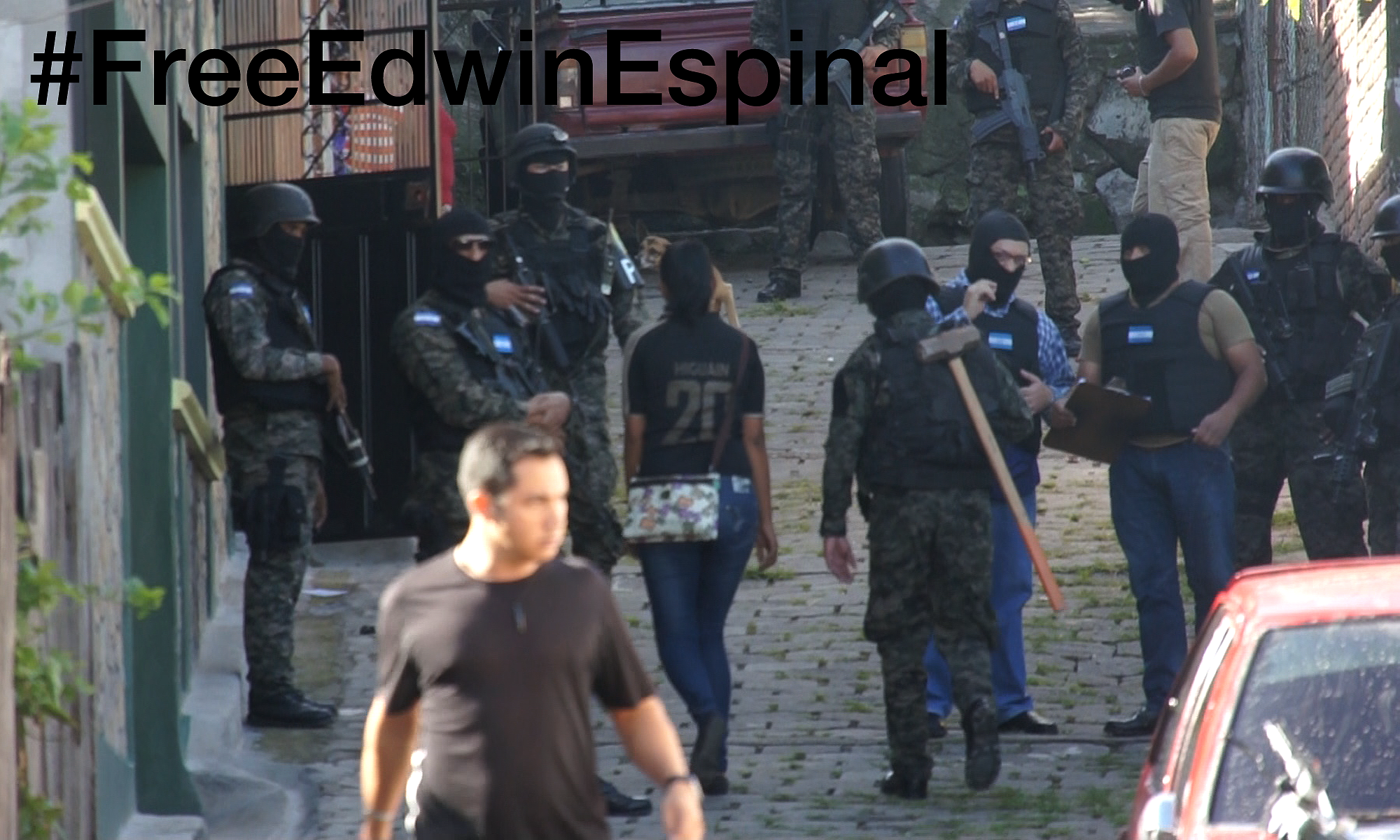
Day 45, August 12 2009 from Oscar (my translation)

In contrast to what we might have expected, given the circumstances in which many of us Hondurans have lived for the past 45 days, the national team won against Costa Rica, 4-0. At any other time this would be good news- what could be better than the feeling of getting closer to the World Cup, celebrating in bars and stadiums, or as in my case, smile at the demonstration of Honduran patriotic euphoria. But this time is different, because tomorrow everyone will be talking about the game and little will be mentioned in the media about the brutal repression carried out against the resistance in Tegucigalpa as well as in San Pedro Sula.

Since yesterday's events we have been able to recognize the leadership is incapable of controlling the march, its energy and frustration after having already spent six long weeks in the streets. Juan Barahona's recognition that the march had gotten out of his hands and he could not control the infiltrators shows that, even if the movement has massive popular, moral and emotional support from many Honduran men and women, the leadership is far from having the stature and the maturity to know how to lead this fight.

Today's march began just as a majority of the marches before it. From the street in front of the Universidad Pedagógica. Yesterday's repression resulted in a very large number of protesters (perhaps more than yesterday's march), who, moved by indignation and fury came to show their condemnation for the new tactics of the regime. They walked along the avenue that goes toward INTUR Plaza, where they always end up, and just like yesterday, a group of protesters pushed the entire mass toward the the central plaza in the historic city center of Tegucigalpa.

There had been reasons to want to go to the National Congress, because apart from its well-known role in the coup d'etat, the recent proposed law to reinstate obligatory military service caused indignation among many of the protesters. But going into a rat's nest like the center of Tegucigalpa without a specific strategy, without security measures or means to control provocateurs, is suicide.

Even before the bulk of the march made it to the central park, while they were still walking down Cervantes Avenue, a small group of youths situated themselves in the plaza below the National Congress which at that point had some 20 police guarding it, and had the "luck" of finding Ramón Velázquez Nazzar, secretary of the National Congress and one of the most repugnant figures in it. His attitude, as I mentioned in an earlier note, was one of contempt, provoking the protesters. But this time there was no one there to control the youths, who furiously accepted the old man's invitation, grabbing him by the hair and dragging him a couple meters, kicking him just as the police immediately proceeded to do to them. This was the excuse the police needed to initiate a nationwide repression with all the force they know how to use when their reins are loosed.

While they carried on beating and arresting protesters in the center, in the gardens of the UPNFM (Universidad Pedagógica) an army combat unit entered by force, beating all the students and faculty who were preparing the grounds to receive the pilgrims who were marching on the other side of the city. Witnesses report that as they were being humiliated, the military soldiers took pictures of them, threatening to kill them if they were seen again among the protesters. One of the DA office attorneys from the common crime section who went to the site some five hours after the military attack, told the press that the people there had not been arrested, but rather "detained," and only as witnesses because they had found evidence of molotov cocktails in the place and were carrying out the necessary investigations.

What the attorney did not say was how the resistance discipline committee had managed to capture a police agent infiltrating the protesters with 20 bottles of molotov cocktails in his backpack, that it was they who brought the complaint to the DA's office asking that the make themselves present at the site to take witnesses' statements (and proof of this is available in the complaint, which was registered by [human rights organization] COFADEH), that it was just minutes after the DA's office was contacted when the army attacked, overtaking the facilities and using said cocktails in the cases that they are now pursuing against members of the resistance.

At the moment there are three official cases for crimes of Terrorism, Sedition, Aggravated Arson, Illicit Association which could carry sentences of 15-20 years. Tomorrow another group of accused will be brought before the judge, among them our compañera, the artist Alba Ochoa, whom we all know and respect, and who was tortured by the police this afternoon.

The injured from the last two protests can be found in Hospital Escuela and the rest of the hospitals of the city. The nurses at Hospital Escuela tell how the doctors refuse to tend to the new arrivals from the protests, arguing that they were asking for it by causing this whole mess. A man, 54 years old, was checked in with several broken ribs and injuries caused by the chains the police used to beat him with. A woman suffered sexual attack by police who shoved a baton up her anus. A youth with two gunshot wounds in his abdomen was suspicious of anyone asking questions, while two beds down was another woman who had been cruelly beaten by a policewoman who hit her repeatedly on the head with a black-painted tube [translator's note: the police have run out of batons, and are now using tubes to beat protesters].

On the national channel Roberto Micheletti justified the repression as necessary actions to control the foreign terrorists and bad Hondurans who only want to harm the country, then issued a prayer to the heavens that the national team would win the match against Costa Rica, and his god answered his prayer, perhaps because, as a general of the Honduran army said, that god is on his side.

¡NO PASARÁN!

original:
Día cuarenta y cinco. 12 de agosto de 2009

Contrario a lo que habría esperado, dada las circunstancias en que vivimos muchos hondureños desde hace cuarenta y cinco días, la selección nacional ganó frente a la selección de Costa Rica por una diferencia de cuatro goles a cero. En otro momento sería una buena noticia, que mejor que sentirnos cerca del mundial de futbol, celebrar en los bares y estadios, o como suele ser en mi caso, sonreír frente a las muestra de euforia patriótica catracha. Pero esta vez es distinto, porque mañana todos hablarán del partido y poco se mencionará en los medios de la brutal represión que vivió la resistencia tanto en la ciudad de Tegucigalpa como en San Pedro Sula.

Desde los acontecimientos del día de ayer pudimos reconocer una incapacidad de la dirigencia de controlar la marcha, su energía y frustración ante una resistencia que lleva ya más de seis semanas en las calles. El reconocimiento por parte de Juan Barahona de que la marcha se le había salido de las manos y que no podían controlar a los infiltrados muestra que, si bien el movimiento cuenta con un gran respaldo popular, moral, y anímico de gran cantidad de hondureños y hondureñas, la dirigencia se encuentra lejos de tener la estatura, y la madurez para saber dirigir esta lucha.

La marcha de hoy salió como han salido la gran mayoría de las marchas. De la calle frente a la Universidad Pedagógica. La represión de ayer capitalizó hoy un número muy grande (quizá más grande que los manifestantes de ayer) que impulsados por la indignación y la rabia se dieron cita para mostrar su repudio a las nuevas tácticas del régimen. Caminaron por la avenida que lleva hasta la plaza INTUR, a donde siempre llegan, y al igual que ocurrió ayer, un grupo de manifestantes empujó la maza completa hasta la plaza central en el casco histórico de Tegucigalpa.

Había razones para querer ir al Congreso Nacional, porque aparte del ya conocido rol dentro del golpe de estado, la reciente propuesta de ley que vuelve el servicio militar voluntario en obligatorio causó indignación en muchos de los manifestantes. Pero llegar a una ratonera, como puede ser el centro de Tegucigalpa, sin una estrategia definida, sin medidas de seguridad y control de los agitadores, es un suicidio.

Incluso antes que el grueso de la marcha se apersonara al parque central, y mientras aun caminaban por la avenida Cervantes, un pequeño grupo de jóvenes se colocó en la plaza bajo el Congreso Nacional que a esas alturas apenas contaba con una veintena de elementos policiales y para su “suerte” se encuentraron con Ramón Velázquez Nazzar, secretario del Congreso Nacional y una de las figuras más repudiables del mismo. Su actitud, ya en una nota anterior lo mencioné, fue de desprecio y de provocación a los manifestantes. Pero esta vez no había nadie quien controlara a los jóvenes presentes que enfurecidos aceptaron la invitación del anciano sacándolo del pelo y arrastrándolo un par de metros a punta de patada, de la misma forma que haría la policía con los manifestantes seguidamente. Esa fue la escusa que necesitaba la policía para iniciar una represión a nivel nacional con toda la fuerza que saben usar cuando les dejan la correa suelta.

Mientras en el centro perseguían, golpeaban y detenían a los manifestantes, en los jardines de la UPNFM un comando del ejército ingresó por la fuerza golpeando a todos los estudiantes y profesores que preparaban las condiciones para recibir a los peregrinos que andaban en la marcha al otro lado de la ciudad. Cuentan testigos que mientras eran humillados, los elementos militares les tomaban fotos amenazándoles con matarlos si eran vistos nuevamente entre los manifestantes. Uno de los fiscales de delitos comunes que se hizo presente al lugar unas cinco horas después del ingreso militar, dijo a la prensa que ellos no eran detenidos, sino “retenidos”, y solo en calidad de testigos porque habían encontrado unas pruebas de bombas molotov en el lugar y estaban haciendo las investigaciones respectivas.

Lo que no dijo dicho fiscal, fue que el comité de disciplina de la resistencia logró dar captura a un agente de la policía infiltrado entre los manifestantes y con unas veinte botellas de cocteles molotov en la mochila, que fueron ellos quienes presentaron la denuncia a la fiscalía pidiendo que se hicieran presentes en el lugar para levantar las respectivas declaraciones (de esto hay constancia en el acta que se levantó por parte de COFADEH) que minutos después de la llamada a la fiscal se hizo presente el ejército para reprimir, tomar las instalaciones y usar dichos cocteles en los casos que ahora se estan siguiendo contra los miembros de la resistencia.

A esta altura hay 3 procesados oficiales por los delitos de Terrorismo, Sedición, Incendio Agravado, Asociación Ilísita los cuales podrían llevarles penas de 15 a 20 años. Mañana se presentarán ante el juez un grupo más de acusados, entre ellos la compañera artista Alba Ochoa, quien todos conocemos y respetamos, y quien sufrió tortura por parte de la policía la tarde de hoy.

En el Hospital Escuela y demás hospitales de la ciudad se encuentran los heridos de las últimas dos manifestaciones. Las enfermeras del lugar cuentan como los doctores se niegan a atender a los ingresados que vienen de las manifestaciones argumentando que ellos se lo buscan al causar este relajo. Un señor, de 54 años de edad, fue ingresado con varias costillas rotas y heridas causadas por las cadenas que usaron los elementos policiales para golpearlo. Una mujer sufrió de agresiones sexuales por parte de elementos policiales que introdujeron un tolete en su ano. Un joven con dos heridas de bala en su abdomen desconfiaba de quien le hacía preguntas mientras dos camas después estaba otra señora quien fue cruelmente golpeada por una mujer policía y quien sólo le pegaba en la cabeza con un tubo pintado de negro.

En cadena nacional Roberto Micheletti justificaba la represión como las acciones necesarias para controlar a los terroristas extranjeros y malos hondureños que solo quieren causar daño al país, luego elevó una plegaria al cielo para que la selección ganara el partido frente a Costa Rica, su dios le cumplió su plegaria, quizá porque como dijo un general del ejército hondureños, ese Dios está de su lado.

¡NO PASARÁN!