Day 18, July 16th 2009 from Oscar (my translation)

We wrapped up the day trying to read the different signals sent by the coup government throughout the day. The repression will grow, as will the grassroots actions.

In the morning the feminist compañeras were repressed by police who violently evicted them from the facilities of the National Institute of Women (INAM). The Government of Micheletti named Mrs. María Marta Díaz as director of that institute, an appointment that feminists condemn with a single voice. The new director needed to use violence against women to be able to take over her position as guarantor of women's rights at the national level.

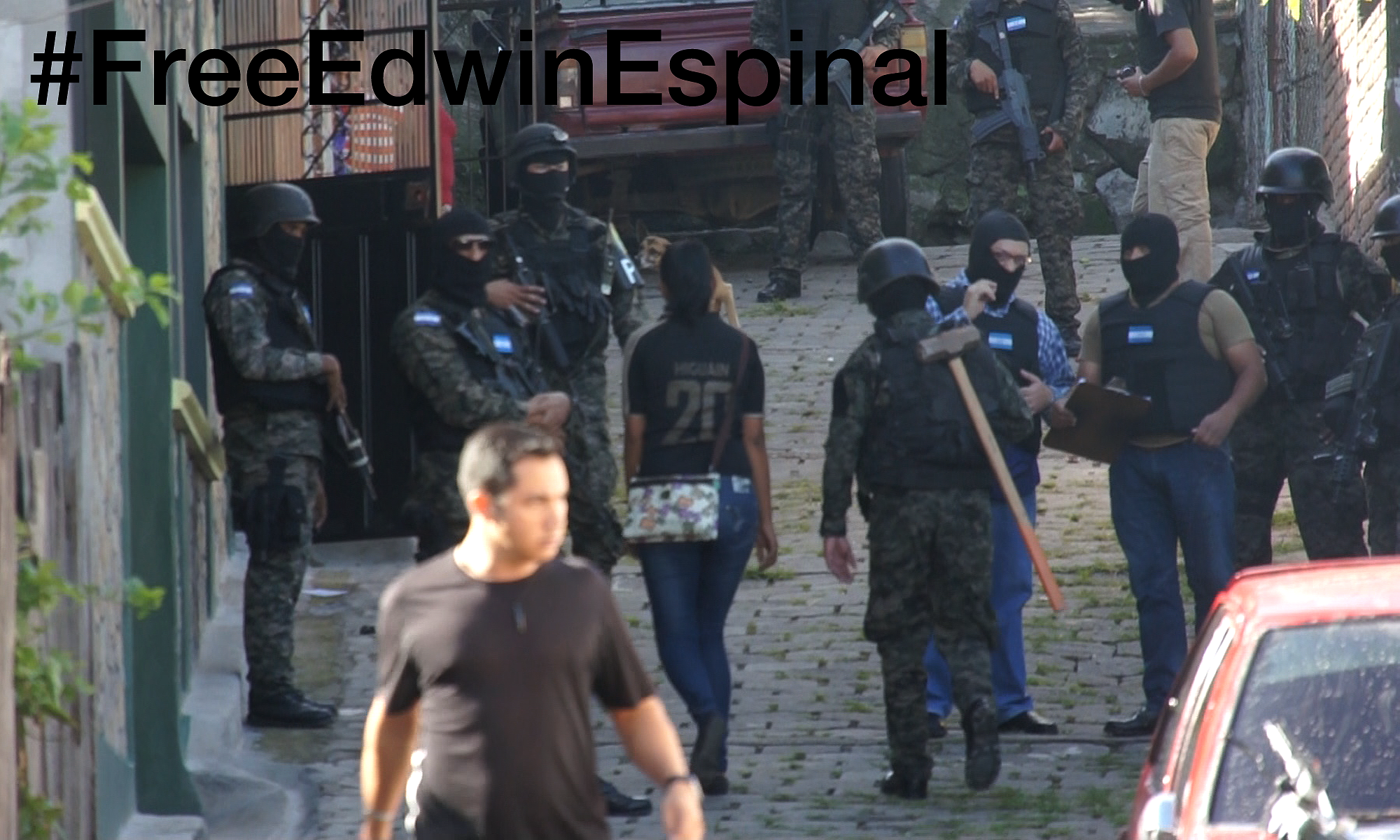
Some kilometers away, the march of the popular bloc moving toward the central park was notified of the repression at INAM and decided to change course. The nervousness of the police was palpable on seeing the march of hundreds of people seeking to defend the compañeras. Minutes later police reinforcements arrived with tanks and it almost erupted into a skirmish. We weren't able to see the new minister because she didn't dare come out.

In contrast to the reaction of Mrs. Díaz who stayed in her office, was the attitude of Velásquez Nassar, secretary of the National Congress and key player in the coup d'etat who, when the march arrived below the Congress building, went out on the balcony with an ironic smile, daring the marchers to enter the building. The marchers were united in their condemnation and disgust, and once again the very same day, a confrontation between the police and the marchers was narrowly avoided.

In the afternoon Micheletti stated that he could resign his post if and only if Zelaya didn't enter the country. These statements and the recent resignation of Ortés Colindres give the first demonstrations that the group behind the coup which up to the moment has functioned as an impenetrable bloc, is cracking. It is clear that we need to put even more pressure on them.

Hours later the Commissioner Héctor Iván Mejía gave statements to the press saying that the police had knowledge of foreign citizens infiltrating the marches with the goal of creating terrorism, bomb businesses and bridges, and create the "illusion" of an armed conflict among Hondurans who, according to him, are a people of peace. The principal pro-government media outlets repeat official information citing secret sources.

At 9pm the radio and television stations announced the reinstatement of the curfew from midnight to 5am, "for the protection of the people and their belongings." At four in the morning two bombs exploded in two fast food restaurants near Toncontín Airport. Once again the government's fortune tellers speak of bombs and blood [resulting from] the protests.

For Thursday July 16th there is an extended occupation of the main highway exits from the city: The north exit, by the popular bloc, and the south exit, by the Liberal Party. In San Pedro Sula a protest was called for outside of Lima, and although its goal has not been made public, it is rumored that they will occupy the Villeda Morales Airport. The border crossings of Nicaragua and El Salvador will be occupied throughout the day on the Honduran and Salvadoran sides, as will the western highway that goes to the different Guatemala border crossings. The archeological site of the Copan ruins has been occupied by indigenous Chortis and in Colón peasants have blocked port access to the banana plantations' trucks.

We are at the doorstep of a difficult weekend. Sunday is the 30th anniversary of the Sandinista revolution and we all hope to celebrate together.

¡No pasarán!